Why Small Creative Bursts Beat Big Creative Marathons Every Single Time
We've all romanticized the idea of the creative marathon. The writer who locks themselves in a cabin for three weeks and emerges with a finished manuscript. The painter who doesn't sleep for two days straight and produces a masterpiece. The musician who channels some kind of divine inspiration and records an entire album in one frantic weekend.
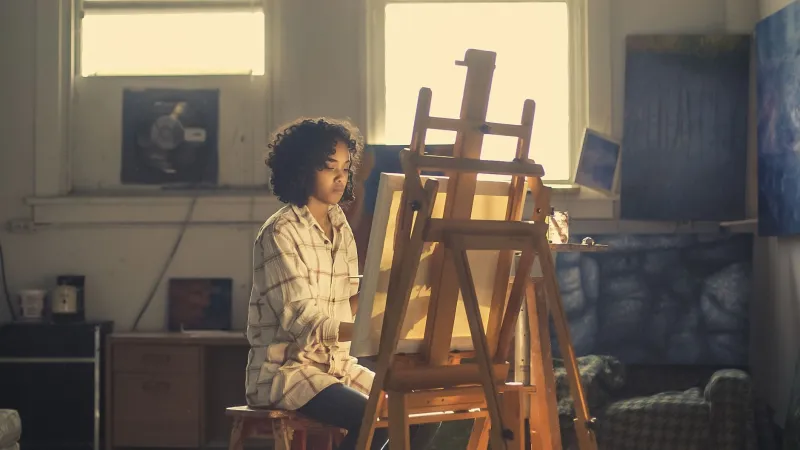
It makes for a great story. But here's what usually doesn't make it into that story: the months of nothing that came before, the burnout that followed, and the half-finished projects scattered in between.
There's a different way. And honestly? It works better.
The Physics of Focus
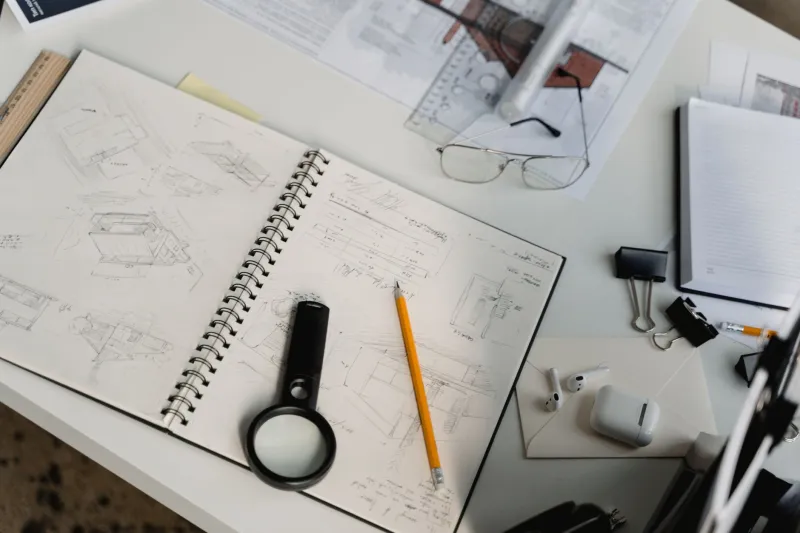
Think about what happens when sunlight passes through a magnifying glass. That same light that's been warming your face all afternoon suddenly has enough concentrated energy to ignite paper. The light didn't get stronger — it just got focused.
Your creative output works the same way. Scattered effort across too many projects, too many hours, too many directions produces a kind of ambient warmth at best. But concentrated, intentional bursts of creative energy? That's where things actually catch fire.
Neuroscience backs this up in a pretty interesting way. Research on what's called "ultradian rhythms" — the 90-to-120-minute cycles your brain naturally moves through throughout the day — suggests that your mind isn't actually designed for sustained creative output over long stretches. It's designed for focused engagement followed by rest. Ignore those natural cycles long enough and your brain starts pulling energy from somewhere else, usually your mood, your motivation, or your health.
Creative burnout isn't a character flaw. It's often just physics working against you.
What the Breakthroughs Actually Look Like
When you look closely at the careers of people who've made genuinely lasting creative work, the all-night marathon story is rarely the whole picture.
Anthony Trollope, one of the most prolific novelists of the 19th century, wrote for exactly three hours every morning before heading to his day job at the post office. He tracked his word count by the quarter hour and stopped the moment his time was up — even if he was mid-sentence. He published 47 novels this way.
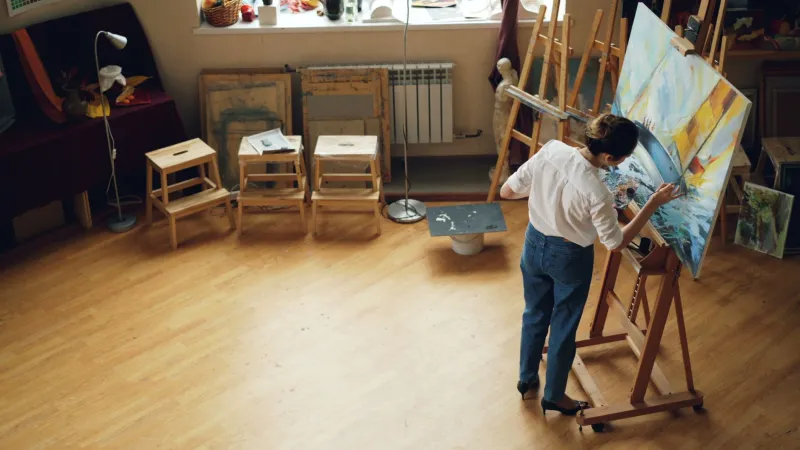
Chuck Close, the American painter known for his massive, photorealistic portraits, talked often about how inspiration is for amateurs. His process was methodical, broken into small repeatable actions. The scale of the work was enormous, but the daily creative unit was deliberately small and manageable.
Jack White, in multiple interviews over the years, has spoken about deliberately creating constraints for himself — limiting time, tools, or resources — because he found that limitation forced a kind of creative intensity that open-ended sessions never produced.
The pattern across all of these is the same: a defined window, a focused effort, and a clean stop. Not a grind. Not a sprint. A burst.
Why We Keep Falling for the Grand Gesture
So if small and consistent works better, why do so many of us keep chasing the big dramatic creative session?
Part of it is cultural. American creative mythology is deeply attached to the idea of the tortured genius going all-in. We celebrate the overnight success story (even when it took fifteen years) and the dramatic creative breakthrough (even when it was built on thousands of invisible small sessions).
Part of it is also psychological. Grand gestures feel like commitment. Clearing your entire Saturday for your creative project feels more serious than carving out forty-five minutes every Tuesday and Thursday morning. But seriousness isn't the same as effectiveness. And that Saturday session, when it goes sideways — and it often does — takes your motivation down with it in a way that a missed Tuesday session never would.
Small bursts are also easier to protect. A two-hour creative window is something you can defend against the chaos of daily life. A full-day creative retreat requires everything to go right.
Finding Your Optimal Creative Rhythm
The practical question is: what does your version of the creative burst actually look like? Because this isn't one-size-fits-all.
Start by paying attention to when your energy naturally peaks. Not when you think you should be creative — when you actually are. Some people do their sharpest thinking first thing in the morning before the noise of the day kicks in. Others hit a real creative gear in the late afternoon. A few genuinely come alive at night. Your optimal creative window is already there. You just might not have been protecting it.
Next, experiment with duration. The research on ultradian rhythms suggests 90 minutes is a natural ceiling before your brain starts asking for a break, but plenty of people find that 45 or 60 minutes is where they're doing their best work. The goal isn't to maximize time — it's to maximize the quality of focus within whatever window you choose.
Then, and this part matters more than people expect, build in a real stop. Not a "I'll wrap up when I reach a good stopping point" stop. A defined end. The reason this works isn't just about rest — it's about leaving something on the table. Ernest Hemingway famously stopped writing each day when he knew what came next, so that starting the following day was easy. That psychological momentum carries forward in a way that wringing yourself dry never does.
The Compound Effect Nobody Talks About
Here's what makes the small burst approach genuinely powerful over time: it compounds.
Forty-five focused minutes every weekday is roughly 195 hours of concentrated creative work over the course of a year. Compare that to the creator who pulls off one big eight-hour session a month and calls it 96 hours annually — less than half, and with far less consistency of quality.
But the math almost undersells it. Consistent small bursts also keep you in relationship with your work in a way that sporadic marathons don't. You stay close to the material. You don't spend the first hour of every session just trying to remember where you were. The work stays warm.
And over months and years, that warmth builds into something. A body of work. A creative practice that feels like yours. A rhythm that doesn't depend on perfect conditions or peak inspiration or a free weekend.
One Ray Is Enough
You don't need to flood the room with light to illuminate what matters. One focused ray, aimed consistently, does more than you'd think.
The grand creative gesture has its place — sometimes you genuinely need a longer stretch to go deep on something. But as a primary strategy, it's unreliable, unsustainable, and honestly a little overrated.
Protect a small window. Show up to it with intention. Stop before you're empty. And then do it again tomorrow.
That's the whole thing. It's less dramatic than the cabin-in-the-woods story, but it's what actually builds something real.