Dialing Into Your Own Signal: How to Stop Getting Lost in Everyone Else's Noise
There's a moment most creatives know too well. You're scrolling through Instagram or TikTok or whatever platform has your attention this week, and suddenly everyone seems to be making the same thing. Same aesthetic. Same format. Same energy. And somewhere in the back of your mind, a quiet little voice asks: should I be doing that too?
That voice is the beginning of frequency loss.
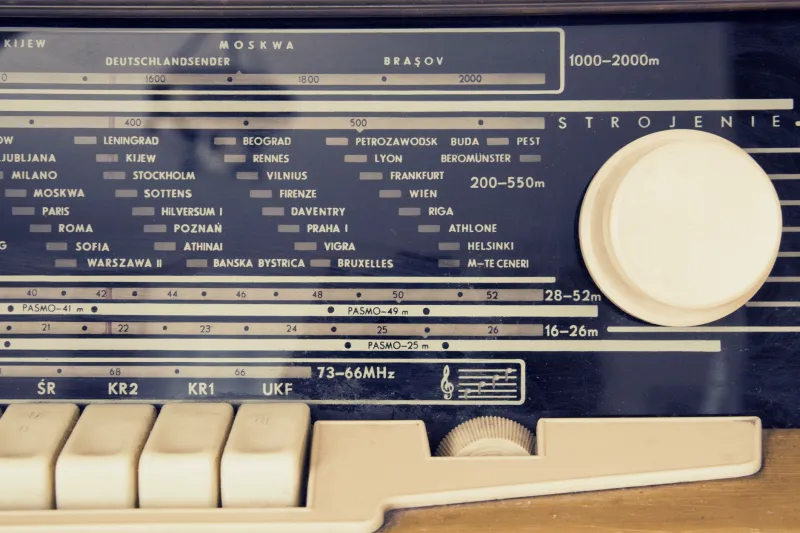
Think of your creative identity like a radio signal. At your clearest and most grounded, you're broadcasting on your own specific wavelength — the one that's native to who you actually are, what genuinely moves you, and how you naturally see the world. But the moment you start chasing what's trending, mimicking what's working for someone else, or second-guessing your instincts because the algorithm seems to reward something different, you start drifting. The signal gets fuzzy. The work starts to feel hollow, even when it looks polished.
This isn't just a vibe problem. It has real consequences for the quality and longevity of your creative output.
What "Your Frequency" Actually Means
Let's get concrete, because "find your authentic voice" is advice that sounds meaningful but lands like smoke. Your creative frequency isn't some mystical essence you need to excavate through journaling retreats (though hey, no judgment if that's your thing). It's more practical than that.
Your frequency is the intersection of three things:
What you notice. Every creative person has a set of things they can't help but pay attention to — textures, patterns, human behaviors, particular emotional undercurrents. These aren't random. They're data points pointing toward your native subject matter.
How you process. Some people naturally reach for metaphor. Others go straight for the literal and precise. Some build from chaos, others from careful structure. The way you naturally make sense of the world is part of your signal.
What you can't stop returning to. Themes, questions, obsessions — the stuff that keeps showing up in your work even when you didn't plan for it. That's not accident. That's frequency.
When all three of those things are aligned in your work, you're broadcasting clearly. When one or more of them has been traded away to chase something external, you're working against your own nature — and people can feel it, even if they can't name why.
The Trend Trap Isn't About Trends
Here's a nuance worth sitting with: the problem isn't trends themselves. Engaging with what's culturally current can be genuinely exciting and creatively generative. The problem is substitution — when you replace your own instincts with the trend rather than filtering the trend through your own lens.
There's a massive difference between "everyone's doing moody earth tones and I love that palette so I'm going to use it in a way that feels like me" versus "everyone's doing moody earth tones so I guess I should pivot my whole visual identity even though it doesn't feel natural."
One is integration. The other is impersonation.
The creatives who tend to build lasting, recognizable bodies of work — the ones whose audiences genuinely connect with them over years, not just viral moments — are the ones who learn to integrate without substituting. They stay curious about what's happening around them while remaining anchored in their own perspective.
Signs You've Drifted Off Your Frequency
Sometimes the drift is obvious. More often it's subtle, showing up as a low-grade dissatisfaction you can't quite name. Here are a few signals worth paying attention to:
-
The work feels technically fine but emotionally flat. You can't point to anything wrong with it, but it doesn't excite you. That flatness is usually a sign you're executing someone else's vision, not your own.
-
You're explaining your work more than you're making it. When you're in frequency, the work tends to speak. When you're off it, you find yourself over-justifying your choices — to yourself, to your audience, to anyone who'll listen.
-
You dread the process. Not in the productive, resistance-before-breakthrough way. In the dull, grinding way that feels like showing up to a job you never actually wanted.
-
You're making work for the reaction, not the making. There's nothing wrong with wanting your work to land. But when the imagined audience response becomes the primary driver of every decision, you've handed over the dial.
How to Tune Back In
Getting back to your frequency isn't usually dramatic. It's more like a series of small recalibrations.
Go back to what made you start. Pull up old work — the stuff from before you had an audience, before you were trying to build anything. What were you drawn to then? What problems were you solving just for yourself? That early work often holds a purer version of your signal.
Make something with no destination. No post, no portfolio, no pitch. Just make it to make it. The absence of external purpose has a way of letting your actual instincts surface.
Audit your inputs. What you consume shapes what you create. If your feed is a wall of work that looks like what you think you should be making rather than what genuinely inspires you, that's worth adjusting. Follow the people who make you feel curious, not the ones who make you feel inadequate.
Notice what you make when you're not trying. Doodles, voice memos, the weird little project you started at midnight and didn't tell anyone about — those are often the closest thing to your raw frequency. Take them seriously.
The Long Game
Here's the thing about broadcasting on your own frequency: it's slower, at first. You won't always catch the wave of whatever's trending. Some pieces will land quietly when you wished they'd land loud.
But over time, something builds that no trend-chasing can manufacture — recognition. Not just name recognition, but the deeper kind, where your audience starts to recognize something in your work that they can't find anywhere else. That's the payoff of staying on your signal even when it would've been easier to switch channels.
Your creative frequency is already there. It's been there the whole time. The work isn't finding it — it's learning to trust it enough to stop reaching for someone else's dial.