From Hidden to Illuminated: What Really Happens When You Let Your Creative Work Step Into the Light
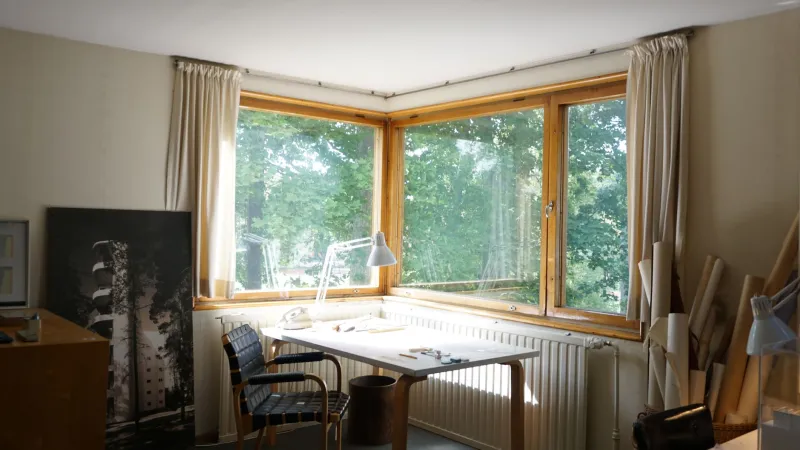
Sunlight doesn't ask permission before it fills a room. It just comes in — through cracks, windows, open doors — and everything it touches becomes visible. Your creative work has that same potential. But unlike sunlight, it usually needs you to open the door.
That's the uncomfortable part, isn't it?
Most of us who make things — whether that's visual art, music, writing, design, or anything else that comes from the inside out — spend a long time in what I'd call the shadow phase. We create in notebooks, on hard drives, in sketchbooks tucked under the bed. We refine and revise and tell ourselves we're just not ready yet. And sometimes that's true. But a lot of the time, if we're being honest, the not-ready story is just a softer way of saying I'm scared of what happens when people actually see this.
Here's what nobody tells you: the fear doesn't go away when you're ready. It goes away — slowly, partially — when you start doing it anyway.
The Paradox of Private Effort
There's real value in working privately. Some of the best creative development happens in quiet, unobserved spaces where you're free to mess up, experiment, and follow weird instincts without an audience. That kind of protected creative time is genuinely important and worth defending.
But there's a version of private effort that stops being about development and starts being about avoidance. You know you've crossed that line when the work is good — actually good — and you're still finding reasons to keep it off the table.
The paradox is this: creative work almost always needs contact with the world to become fully itself. A song that no one hears is still a song, technically. But a song that someone hears and cries to, or dances to at 2 a.m., or sends to a friend going through a hard time — that song has become something bigger than what you made alone. The work completes itself in the space between you and the person receiving it.
Keeping it hidden doesn't protect it. It just keeps it incomplete.
What Visibility Actually Does to You
Let's talk about the psychological shift that happens when you start letting your work be seen — because it's not always what you'd expect.
First, there's the exposure jolt. That queasy, electric feeling right after you post something or share something or hang it on a wall. Your nervous system reads that moment as danger, even when there is none. This is normal. It doesn't mean you've made a mistake. It means you've done something that matters to you.
Then something quieter starts to happen. When you survive that first exposure — when the world doesn't end, when some people actually respond with warmth or recognition — your internal threshold shifts. What felt like a massive risk becomes a smaller one. You recalibrate. The next share is still scary, but it's a different size of scary.
Over time, visibility starts to reshape your identity as a creative person. You stop thinking of yourself as someone who makes things privately and start thinking of yourself as someone who puts work into the world. That's not a small shift. That's a foundational one. It changes what you reach for, what you attempt, and how seriously you take your own practice.
The Practical Ripple Effects Nobody Talks About
Beyond the internal transformation, visibility creates practical changes that compound in ways that are hard to predict from the inside.
Connections find you. When your work is visible, people who resonate with it can actually reach you. Collaborators, clients, fellow creatives, mentors — none of them can find work that's sitting in a drawer. Opportunity, in almost every form, requires some version of discoverability.
Your craft sharpens. There's a specific kind of attention you bring to work when you know it's going to be seen. Not perfectionism — that's a trap — but intentionality. You make slightly different decisions. You finish things more completely. The invisible work often stays soft at the edges in a way that public work can't afford to.
You build evidence. Every piece you share becomes proof — to yourself and others — that you're someone who does this. That accumulation of visible effort is what builds a body of work, a reputation, a creative legacy. None of that is possible while everything stays hidden.
The Sunlight Metaphor Is Real
The name Sunray Kelley isn't accidental. Sunlight is a pretty good model for what visibility can do.
Sunlight is clarifying. When your work is out in the open, you see it differently. You notice what's working and what isn't in ways that are harder to spot in the dark. Feedback — even the uncomfortable kind — is information. It helps you grow in directions you couldn't have navigated alone.
Sunlight enables growth. Plants don't grow in closets. Creative practices don't either, not fully. There's a reason so many artists describe a breakthrough moment that came after they started sharing — not before. The visibility itself becomes a catalyst.
And yes, sunlight exposes things. That's the scary part. Being seen means being seen — the rough edges, the work that didn't quite land, the attempts that were earnest but imperfect. That exposure is real. But it's also survivable, and usually far less catastrophic than the version of it we rehearse in our heads.
A Few Honest Thoughts on Starting
If you're in the shadow phase right now, here's what I'd offer:
Start smaller than you think you need to. Visibility doesn't have to mean a launch or a gallery show or a viral post. It can mean sharing one piece with three people you trust. It can mean posting something in a small community where you feel relatively safe. The goal isn't an audience of thousands — it's breaking the habit of hiding.
Let it be imperfect. The work you share doesn't have to be your best work ever made. It just has to be real and honest and finished enough. Waiting for perfect is waiting forever, and you know it.
Notice what happens after. Not just the external response, but your internal one. How does it feel to have let something out? Most people report that the relief is bigger than the fear, once it's done. Sit with that information.
The light is already in you. The work you've been making in private — the pieces you've been protecting and refining and second-guessing — they already carry something worth seeing. The only question is whether you're going to let them do what they were made to do.
Open the door. See what the light does.